
 Contact Us
 Refer a Patient
 Pay My Bill

At Fraser Eye, we understand that clear vision is fundamental to living your best life. Practicing in Detroit, Michigan, our team is committed to providing you with the most advanced LASIK technology available. We specialize in vision correction using Wavelight Sightmap and Wavelight Plus ray-tracing technology, which offers superior precision and outcomes compared to other refractive surgery methods.
LASIK (Laser-Assisted In Situ Keratomileusis) is a proven, FDA-approved procedure that reshapes your cornea to correct refractive errors, including myopia (nearsightedness), hyperopia (farsightedness), and astigmatism. Thousands of patients across Michigan have trusted Fraser Eye to help them achieve clear vision without glasses or contact lenses.
- What Is LASIK?
- Who Is a Candidate for LASIK?
- LASIK Benefits
- LASIK Pricing
- The LASIK Procedure: What to Expect
- Potential Risks and Side Effects
- The Alcon WaveLight® Plus & Sightmap™ Advantage
- Why Choose Fraser Eye for LASIK in Detroit, Michigan
- Patient Testimonials and Reviews
- Frequently Asked Questions About LASIK
What Is LASIK?
The procedure consists of three main steps:
- Corneal Mapping: Your eye is mapped using advanced diagnostic technology to create a detailed profile of your cornea’s unique shape and imperfections.
- Flap Creation: A femtosecond laser creates a thin, protective flap on the cornea’s surface, which is gently lifted to expose the underlying tissue.
- Corneal Reshaping: The excimer laser precisely reshapes the corneal tissue based on your specific prescription and eye characteristics. The corneal flap is then repositioned, where it naturally adheres without stitches.
The entire procedure typically takes 10 to 15 minutes per eye, and most patients experience improved vision within 24 hours.

Who Is a Candidate for LASIK?
LASIK is suitable for most adults with stable refractive errors. Ideal candidates typically have:
- A stable prescription for at least one year
- Age 18 or older (preferably 21 or older for optimal corneal stability)
- Healthy corneas with adequate thickness
- No active eye diseases or conditions like keratoconus
- No pregnancy or nursing (hormonal changes can affect prescription stability)
- Realistic expectations about outcomes
During your comprehensive consultation at Fraser Eye, our experienced team will evaluate your eye health, corneal thickness, and prescription to determine if LASIK is right for you. We also offer alternative procedures like PRK (Photorefractive Keratectomy) or EVO ICL™ for patients who may not be ideal LASIK candidates.
LASIK Benefits
Clear Vision Without Glasses or Contacts: Most LASIK patients achieve 20/20 vision or better, eliminating the need for corrective eyewear in most situations.
Quick Results: Vision improvement begins within 24 hours, with stabilization occurring over the following weeks.
Improved Quality of Life: Patients report greater freedom in sports, travel, and daily activities without the hassle of glasses or contacts.
Permanent Results: LASIK provides lasting vision correction. While presbyopia (age-related vision changes) may occur later in life, your LASIK correction remains stable.
Cost-Effective Long-Term: While LASIK requires an upfront investment, the elimination of ongoing contact lens and glasses expenses makes it economical over time.
LASIK Pricing
At Fraser Eye, we believe that vision correction decisions should be based on what is best for your eyes — not on differences in technology pricing. For that reason, all of our refractive surgery procedures are offered at a set fee of $1,882 per eye regardless of the specific technology or approach recommended. This price includes a current promotional discount of $1,000 applied.
This unique pricing structure allows our surgeons to recommend the procedure that is most appropriate for your individual eye anatomy and visual goals, without cost influencing the decision.
We also offer flexible financing options to help make LASIK accessible for patients throughout Detroit, Michigan, and surrounding communities.
During your consultation, we will review your candidacy, answer your questions, and discuss payment options in detail so you can move forward with clarity and confidence.
$1,882/eye
$1,882/eye
$1,882/eye
Varies, depending on lens implant
Quick (24-48 hrs)
2-4 Weeks
1-2 Weeks
1-2 Weeks
10 Minutes
10 Minutes
20-30 Minutes
15-20 Minutes

Yes, up to -12D
Yes, up to -12D
Yes, up to -20D
Yes, up to -26D
Yes, up to +5D
Yes, up to +5D

Yes, up to +10D
Yes, with Monovision
Yes, with Monovision
Yes, with multifocal IOLs
Yes, during recovery
A little, during recovery
The LASIK Procedure: What to Expect
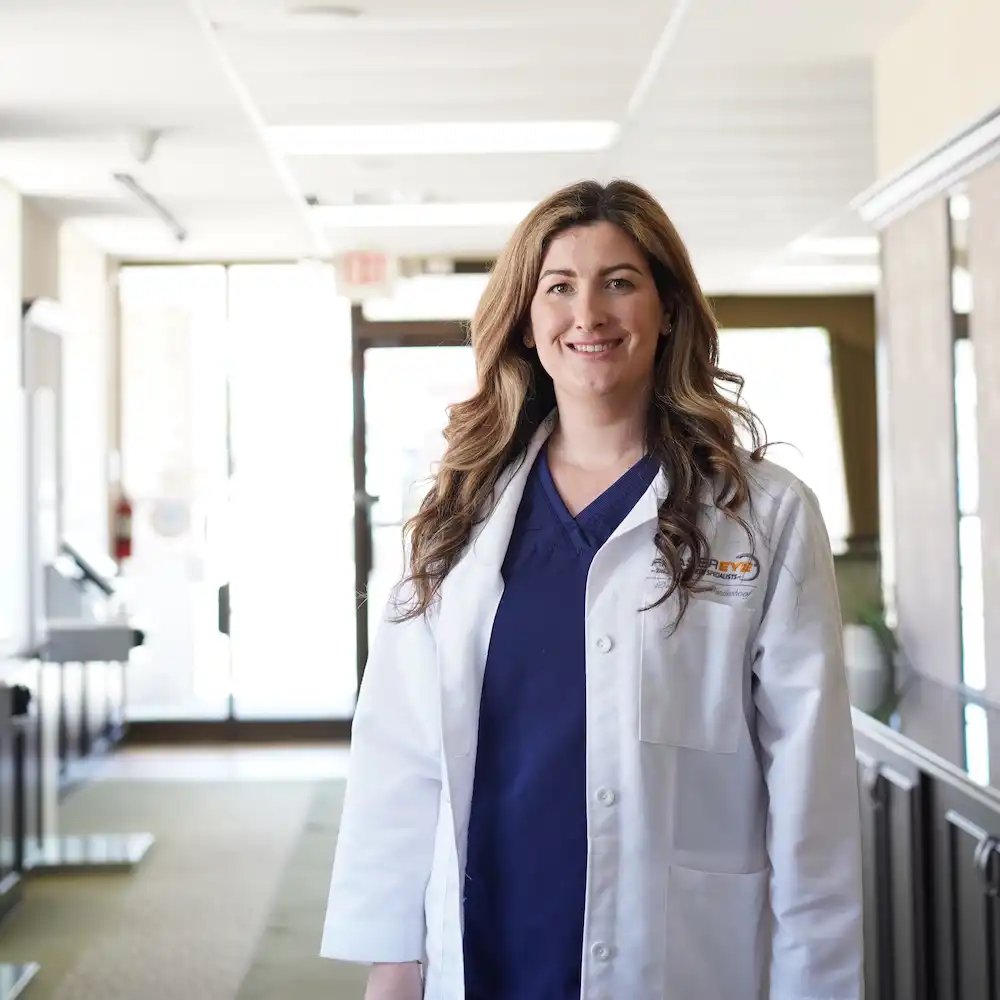
Pre-Operative Consultation
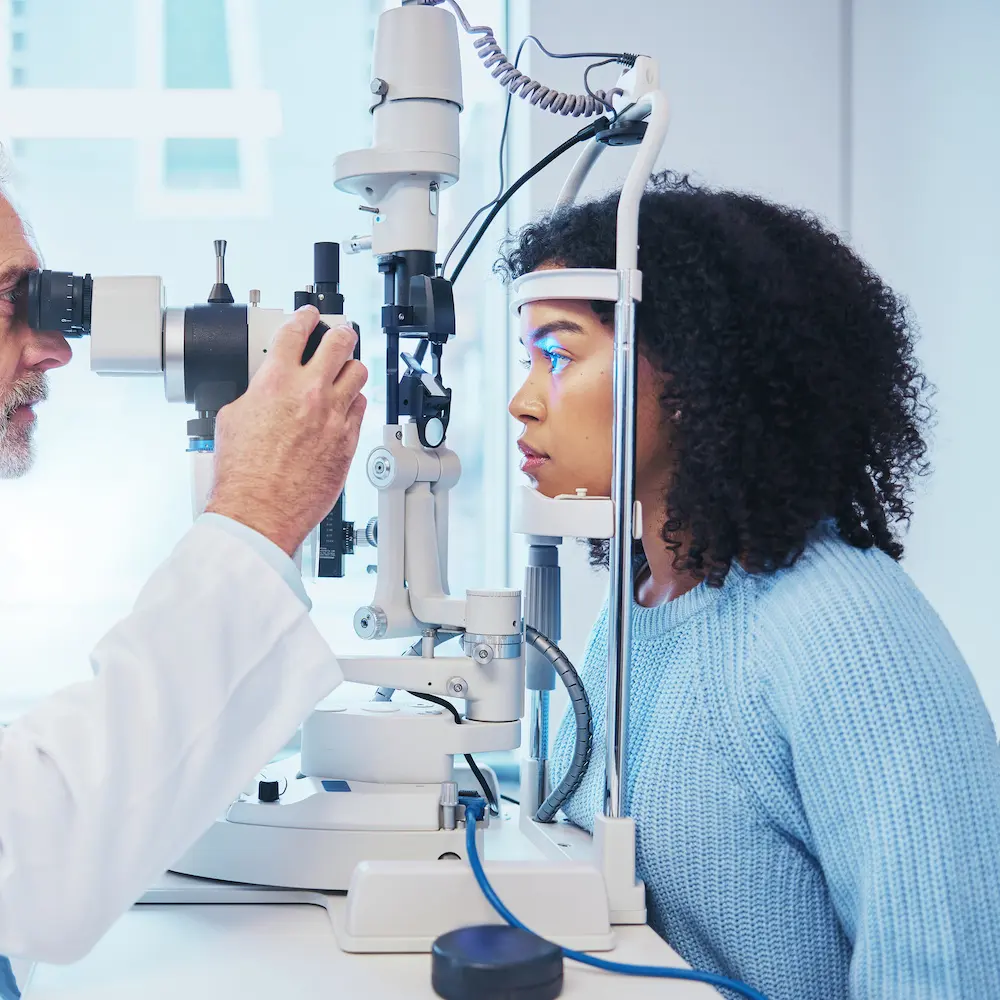
Your LASIK journey begins with a comprehensive eye examination. We’ll assess your vision, corneal thickness, eye health, and overall suitability for the procedure. Advanced diagnostic imaging, including corneal topography and wavefront analysis, will be performed to create your personalized treatment plan.
You’ll also discuss your lifestyle, visual goals, and any concerns with our experienced team. This is an excellent opportunity to ask questions and ensure you feel confident about your decision.
Preparation for Surgery
In the weeks leading up to your procedure:
- Stop wearing contact lenses at least two weeks before surgery (soft contacts) or three weeks (rigid gas-permeable contacts) to allow your cornea to return to its natural shape.
- Arrange for transportation on the day of surgery, as you won’t be able to drive immediately after the procedure.
- Avoid eye makeup, lotions, and perfumes on the day of surgery.
- Take prescribed medications as directed by our team.
The Day of Surgery
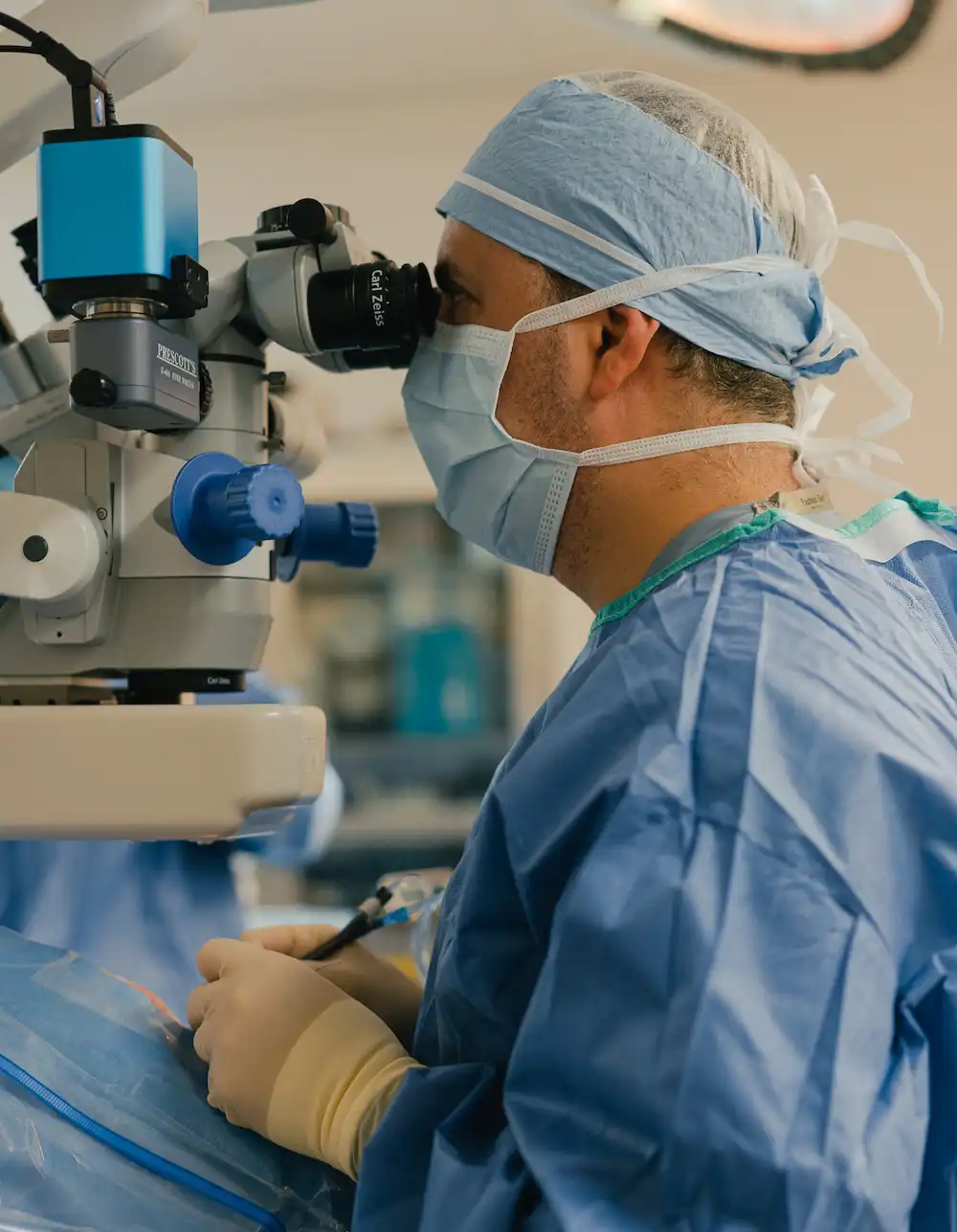
On the morning of your procedure, eat a light breakfast and take any prescribed medications. You’ll arrive at our facility about an hour before your scheduled surgery time.
Your eye surgeon will:
- Administer numbing eye drops to ensure your comfort
- Place a speculum to keep your eye open during the procedure
- Use the Wavelight Sightmap system to map your cornea
- Create the corneal flap using a femtosecond laser
- Reshape your cornea with the excimer laser based on your unique prescription
- Reposition the corneal flap
The procedure is painless, though you may feel slight pressure. Most patients describe the experience as quick and straightforward.
LASIK Recovery
One of the biggest advantages of LASIK is how quickly most patients recover. Many people are seeing clearly and back to most normal activities within 24 to 48 hours, although healing continues over the following weeks.
The First 1–2 Days
Immediately after surgery, your vision may be blurry or hazy. By the next day, many patients notice significant improvement. Mild dryness, light sensitivity, or a gritty sensation are common early on.
Most patients return to desk work and light activities within a day or two.
Activity Guidelines
While visual recovery is fast, your eyes still need time to heal. During the first week, you should:
- Use prescribed eye drops as directed
- Avoid rubbing your eyes
- Avoid getting water directly in your eyes for five days
- Avoid eye makeup for five days
- Avoid exercise for at least one week
Swimming and hot tubs should be avoided for two weeks, and contact sports for four weeks. You should not drive on the day of surgery.
Your surgeon will monitor your progress at follow-up visits and provide personalized guidance as your vision stabilizes.
For full recovery instructions, download our Do’s & Don’ts After LASIK guide.
Potential Risks and Side Effects
LASIK is a safe procedure with a low rate of complications.1 However, like any surgical procedure, there are potential risks and side effects to consider:
- Dry Eye: Some patients experience temporary dry eye after LASIK, which is usually managed with lubricating eye drops. This typically resolves within three to six months.
- Glare and Halos: Some patients may notice glare or halos around lights, especially at night. Advanced wavefront technology like Wavelight Sightmap significantly reduces this risk.
- Undercorrection or Overcorrection: While rare, your vision may not be fully corrected on the first attempt. Enhancement procedures can address this.
- Corneal Ectasia: This rare condition involves progressive corneal weakening. Careful patient selection and corneal thickness assessment minimize this risk.
- Infection: Serious infections are extremely rare with modern surgical techniques and proper post-operative care.
During your consultation, we’ll discuss these risks in detail and explain how our advanced technology and surgical expertise minimize complications.
The Alcon WaveLight® Plus & Sightmap™ Advantage
At Fraser Eye, we perform LASIK using the Alcon WaveLight® Plus platform with Sightmap™-guided planning — an advanced refractive system designed to enhance precision and personalization.
Ray-Tracing–Guided Customization
WaveLight Plus uses ray-tracing technology to analyze how light travels through your entire optical system. Rather than relying only on a glasses prescription, it gathers detailed diagnostic measurements to help your surgeon design a treatment plan tailored to your eye.
Sightmap™ captures thousands of corneal data points to create a three-dimensional model, supporting a highly individualized correction strategy based on your unique anatomy.
Compared to SMILE
While SMILE (Small Incision Lenticule Extraction) is an effective refractive option for many patients, it does not incorporate full ray-tracing analysis in the same way. WaveLight Plus allows surgeons to integrate higher-order aberration data into surgical planning for a more data-driven LASIK approach.
Emerging clinical data also highlights the potential visual outcomes associated with this technology. In one reported study, 98% of patients treated with WaveLight Plus achieved 20/12.5 vision or better, compared to 82% of patients who underwent SMILE Pro.2
Both LASIK and SMILE are safe and effective when performed on appropriate candidates. During your consultation, our surgeons will determine which procedure best aligns with your eyes and visual goals.

Advanced Laser Control
The WaveLight excimer laser features high-speed treatment and real-time eye tracking to maintain alignment during the procedure. Combined with detailed diagnostics, this technology supports precise, customized vision correction.
Why Choose Fraser Eye Care for LASIK?
At Fraser Eye, we combine cutting-edge Wavelight Sightmap technology with decades of clinical expertise to deliver exceptional LASIK outcomes. Our surgeons are board-certified ophthalmologists with extensive training in refractive surgery, and our entire team is dedicated to ensuring your comfort and satisfaction throughout your LASIK journey.
Advanced Technology: We invest in the latest Wavelight Sightmap and Wavelight Plus ray-tracing systems, ensuring you receive the most precise, predictable results available.
Experienced Surgeons: Our board-certified ophthalmologists have performed thousands of successful LASIK procedures and stay current with the latest surgical techniques and advancements.
Comprehensive Evaluation: We perform thorough pre-operative assessments to ensure you’re an ideal candidate and to customize your treatment plan to your unique eye anatomy.
Patient-Centered Care: From your initial consultation through post-operative follow-up, we prioritize your comfort, safety, and satisfaction.
Flexible Financing: We offer multiple financing options to help make LASIK accessible. Qualified patients may have access to payment plans as low as $80 per eye per month — approximately $3 per day. Our team will review available options with you during your consultation.
Convenient Locations: With multiple locations throughout Metro Detroit, we serve patients across Michigan.
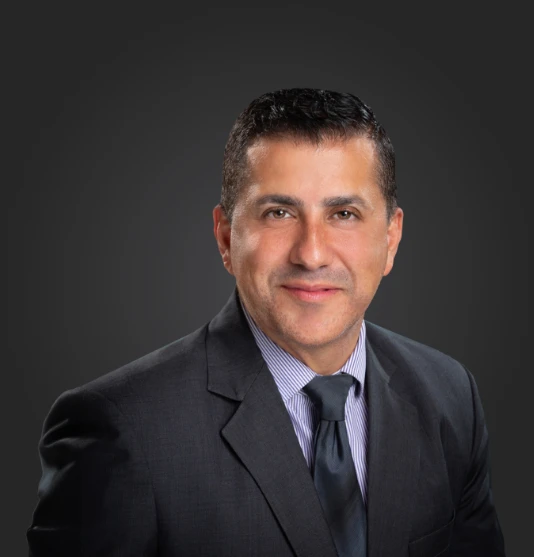
Your LASIK Providers


Fraser is by far your best option if you're looking for a place to get Lasik. I recently had my procedure done, and it went really well from beginning to end. They are very accommodating, and their communication and facility are in excellent condition. Although I was previously skeptical about the Lasik procedure, I was really happy. Overall, recovery was very quick, and I was able to see about 90% the following day. All of the nurses and doctors are amazing. They know how to take care of you.Fares Y., Google Review

I do not write reviews often, I am beyond impressed by the professionalism, friendliness, and hard working from this company and employees. I am impressed by both eye doctors that I have seen. Scheduling is open and easy to work with. Highly recommend!!Rachel, Google Review
Frequently Asked Questions About LASIK
Yes, LASIK provides permanent vision correction. The corneal reshaping is permanent and does not revert. However, your eyes may change over time due to aging or other factors. If significant changes occur, an enhancement procedure may be recommended.
LASIK results are permanent. The corneal reshaping does not change. However, presbyopia (age-related vision changes) may develop in your 40s or 50s, which is a natural part of aging and affects everyone, whether or not they’ve had LASIK.
Yes, LASIK effectively corrects astigmatism. In fact, Wavelight Sightmap technology is particularly effective at correcting astigmatism because of its precise wavefront mapping capabilities.5
In most cases, yes. LASIK is designed to correct vision at one primary distance — most commonly distance vision. If you already have presbyopia (age-related near vision loss) or develop it later, you will likely still need reading glasses for close-up tasks.
For some patients, monovision LASIK may be an option. This approach corrects one eye for distance and the other for near vision to reduce dependence on reading glasses. However, monovision is not ideal for everyone and requires careful evaluation and sometimes a contact lens trial before surgery.
During your consultation, your surgeon will discuss your visual priorities and determine the most appropriate strategy for your eyes and lifestyle.
Most patients return to desk work within 24 to 48 hours. If your job involves physical labor or exposure to dust or chemicals, you may need to wait a bit longer. We’ll provide specific guidance based on your occupation.
LASIK is typically considered an elective procedure and is not covered by most insurance plans. However, some employers offer vision benefits that may partially cover the cost. We recommend checking with your insurance provider. Our team can also discuss financing options to make LASIK affordable.
If your prescription changes significantly after LASIK, an enhancement procedure can be performed to fine-tune your vision. Enhancement procedures are typically less expensive than the initial LASIK surgery.

Contact Us
Ready to achieve clear vision without glasses or contacts? Schedule your comprehensive LASIK consultation with Fraser Eye today. Our experienced team will evaluate your eyes, discuss your vision goals, and determine if LASIK is right for you.
We serve patients throughout the Detroit, Michigan area.
Contact us to book your appointment and take the first step toward visual freedom.
1 American Refractive Surgery Council. Is LASIK Safe? What You Need to Know. Available at: https://americanrefractivesurgerycouncil.org/lasik-safe-need-know/. Accessed February 23, 2026.
2 American Academy of Ophthalmology. Latest Evolution of LASIK Technology Shows Superior Results in New Study. Available: https://www.aao.org/newsroom/news-releases/detail/latest-evolution-of-lasik-technology-shows-results. Accessed March 19, 2026.
3 Moshirfar M, Bennett P, Ronquillo Y. Laser In Situ Keratomileusis (LASIK) [Updated 2023 Jul 24]. In: StatPearls [Internet]. Treasure Island (FL): StatPearls Publishing; 2025 Jan-. Available from: https://www.ncbi.nlm.nih.gov/books/NBK555970/. Accessed February 23, 2026.
4 American Academy of Ophthalmology. Latest evolution of LASIK technology shows superior results in new study. News release. October 18, 2025. Available: https://www.aao.org/newsroom/news-releases/detail/latest-evolution-of-lasik-technology-shows-results. Accessed February 23, 2026.
5 Clinical Ophthalmology. Higher-Order Aberrations Following Ray Trace LASIK and the Impact of Eye Movement on Coma. https://pmc.ncbi.nlm.nih.gov/articles/PMC11588571/. Accessed February 23, 2026.