
 Contact Us
 Refer a Patient
 Pay My Bill
Dry Eye Treatment in Rochester Hills & Detroit, Michigan
Dry eye syndrome affects over
 Trusted Source
Dry Eye Disease
American Academy of Ophthalmology
Go to Source
20 million
Americans, yet many don’t realize they have it,or that effective treatment exists. If your eyes feel gritty, burn, or water excessively, you’re not alone. At Fraser Eye Care Center we specialize in diagnosing and treating dry eye disease with advanced technology and personalized care plans designed specifically for your condition.
Trusted Source
Dry Eye Disease
American Academy of Ophthalmology
Go to Source
20 million
Americans, yet many don’t realize they have it,or that effective treatment exists. If your eyes feel gritty, burn, or water excessively, you’re not alone. At Fraser Eye Care Center we specialize in diagnosing and treating dry eye disease with advanced technology and personalized care plans designed specifically for your condition.
Dr. Rachel Dandar, a board-certified ophthalmologist specializing in cornea and external disease, and cataract surgery, leads our dedicated dry eye clinic. With fellowship training from the University of Illinois Chicago and expertise in complex dry eye cases, Dr. Dandar offers comprehensive solutions, from in-house serum tears production to IPL therapy, OcuSoft lid treatments, advanced meibography diagnostics and prescription treatments.
We understand that dry eye isn’t just uncomfortable—it significantly impacts your quality of life, work productivity, and eye health. That’s why we’ve invested in state-of-the-art diagnostic equipment and specialized expertise to deliver results.
- WHAT IS DRY EYE SYNDROME?
- DRY EYE SYMPTOMS: RECOGNIZING THE SIGNS
- CAUSES & RISK FACTORS FOR DRY EYE DISEASE
- UNDERSTANDING MEIBOMIAN GLAND DYSFUNCTION (MGD)
- TYPES OF DRY EYE: AQUEOUS-DEFICIENT VS. EVAPORATIVE
- ARE YOU A CANDIDATE FOR DRY EYE TREATMENT?
- DIAGNOSING DRY EYE: ADVANCED TESTING AT FRASER EYE
- HOME REMEDIES & SELF-CARE FOR DRY EYE
- PROFESSIONAL DRY EYE TREATMENTS
- FREQUENTLY ASKED QUESTIONS ABOUT DRY EYE TREATMENT
- ABOUT RACHEL DANDAR, MD
WHAT IS DRY EYE SYNDROME?
Dry eye disease (also called dry eye syndrome or keratoconjunctivitis sicca) occurs when your eyes don’t produce enough tears or when your tears evaporate too quickly. Tears are essential: they lubricate the eye surface, protect against infection, and maintain clear vision.
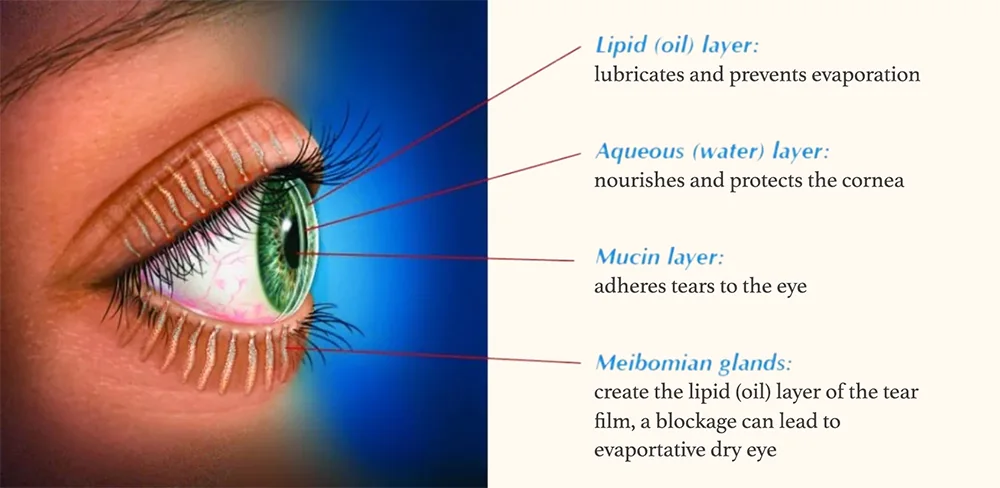
A healthy tear film has three layers:
- Lipid layer (oil): Prevents evaporation
- Aqueous layer (water): Provides lubrication and nutrients
- Mucin layer (mucus): Helps tears stick to the eye surface
When any of these layers is deficient or imbalanced, dry eye develops. According to the American Academy of Ophthalmology, dry eye disease affects approximately 20 million Americans, with prevalence increasing with age and among contact lens wearers.

DRY EYE SYMPTOMS: RECOGNIZING THE SIGNS
Dry eye symptoms vary widely and can range from mild to severe. Common symptoms of dry eye include:
- Burning or stinging sensation in one or both eyes
- Gritty feeling, as if sand is in your eyes
- Excessive tearing (dry eyes often produce reflex tears)
- Watery eyes that don’t provide relief
- Blurred vision, especially later in the day
- Light sensitivity (photophobia)
- Difficulty wearing contact lenses
- Eye fatigue after reading or screen time
- Redness or irritated eyes
- Stringy mucus discharge from the
Trusted Source
Dry Eyes
Mayo Clinic
Go to Source
eyes
Important Note: Many patients are confused by watery eyes as a symptom of dry eye. This occurs because dry, irritated eyes trigger a reflex tear response—but these reflex tears are watery and don’t contain the proper tear film composition to lubricate the eye surface effectively.
If you experience any of these dry eye symptoms, especially if they persist for more than a few weeks, schedule a comprehensive eye exam with our team.
CAUSES & RISK FACTORS FOR DRY EYE DISEASE
Dry eye can develop for many reasons. Understanding the underlying cause helps us recommend the most effective treatment.
Common Causes of Dry Eye:
Age-Related Factors:
- Tear production naturally decreases with age, particularly after age 50
- Hormonal changes during menopause increase dry eye risk in women
Medications:
- Antihistamines (allergy medications)
- Decongestants
- Antidepressants
- Blood pressure medications
- Isotretinoin (acne treatment)
- Hormone replacement therapy
Eye-Related Conditions:
- Blepharitis (eyelid inflammation)
- Meibomian gland dysfunction (MGD) – the most common cause of dry eye
- Contact lens wear (especially extended wear)
- Previous eye surgery (LASIK, cataract surgery)
- Corneal irregularities
Medical Conditions:
- Sjögren’s syndrome (autoimmune disorder affecting tear glands)
- Rheumatoid arthritis and other autoimmune diseases
- Thyroid disorders (hyperthyroidism and hypothyroidism)
- Diabetes
- Lupus
- Scleroderma
Lifestyle & Environmental Factors:
- Prolonged screen time (reduces blinking)
- Dry indoor environments (heating, air conditioning)
- Smoke and air pollution exposure
- Windy or dry climates
- Reduced blinking during focused activities
Other Risk Factors:
- Smoking
- Excessive alcohol consumption
- Nutritional deficiencies (especially omega-3 fatty acids)
UNDERSTANDING MEIBOMIAN GLAND DYSFUNCTION (MGD)
Meibomian gland dysfunction is the leading cause of dry eye disease, affecting approximately
Trusted Source
Distribution of aqueous-deficient and evaporative dry eye in a clinic-based patient cohort: a retrospective study
Lemp MA, Crews LA, Bron AJ, Foulks GN, Sullivan BD
Go to Source
86%
of dry eye patients. Your meibomian glands line the eyelid margins and produce the lipid (oil) layer of your tear film. When these glands become clogged or inflamed, they can’t deliver adequate oil, causing tears to evaporate rapidly.
Symptoms of MGD include:
- Rapid tear evaporation
- Gritty sensation
- Burning eyes
- Blurred vision
- Eyelid inflammation (blepharitis)
At Fraser Eye, we use advanced meibography (OCULUS Keratograph 5M imaging) to visualize your meibomian glands and assess their function. This non-invasive diagnostic tool allows Dr. Dandar to identify gland loss or obstruction—information that directly guides treatment selection.
TYPES OF DRY EYE: AQUEOUS-DEFICIENT VS. EVAPORATIVE
Understanding which type of dry eye you have is crucial for effective treatment.
Aqueous-Deficient Dry Eye
Your tear glands don’t produce enough water (aqueous) layer. This accounts for approximately 10–15% of dry eye cases and is often associated with:
- Sjögren’s syndrome
- Autoimmune diseases
- Aging
- Certain medications
Evaporative Dry Eye
Your tears evaporate too quickly due to insufficient lipid (oil) layer. This accounts for approximately 85% of dry eye cases and is typically caused by:
- Meibomian gland dysfunction
- Blepharitis
- Reduced blinking
- Environmental factors
Many patients have a combination of both types, which is why comprehensive diagnostic testing is essential before recommending treatment.

ARE YOU A CANDIDATE FOR DRY EYE TREATMENT?
Many people live with dry eye symptoms for years without realizing that effective treatment options are available—or that their symptoms may be linked to an underlying condition such as meibomian gland dysfunction (MGD). Because dry eye presents differently from person to person, candidacy isn’t determined by symptoms alone.
If you experience irritation, burning, fluctuating vision, excessive tearing, or discomfort with contact lenses, a professional evaluation may be beneficial. As a first step, Fraser Eye Care offers a Dry Eye Quiz to help identify common signs of dry eye disease and determine whether further diagnostic testing may be appropriate.
The quiz is not a diagnosis, but it can help guide next steps and prepare you for a more productive consultation with our dry eye team.
DIAGNOSING DRY EYE: ADVANCED TESTING AT FRASER EYE
Dry eye diagnosis requires more than just asking about symptoms. At Fraser Eye, Dr. Dandar uses a comprehensive diagnostic approach with state-of-the-art equipment:
Comprehensive Eye Exam
A thorough evaluation of your eye health, vision, and tear film quality.
Tear Break-Up Time (TBUT) Test
Measures how long your tear film remains stable after blinking. A TBUT under 5 seconds indicates evaporative dry eye.
Tear Osmolarity Testing
Evaluates tear salt concentration, which increases in dry eye disease.
Meibography (OCULUS Keratograph 5M)
Advanced infrared imaging that visualizes your meibomian glands without contact or discomfort. This technology reveals gland structure, loss, and obstruction—information not available at all eye care practices.
Schirmer Test
Measures tear production using a small paper strip placed under your lower eyelid for 5 minutes. Results help identify aqueous-deficient dry eye.
Corneal Staining
Uses special dyes to reveal areas of corneal damage caused by dry eye.
This comprehensive diagnostic approach ensures we identify the root cause of your dry eye and recommend the most effective treatment strategy.

HOME REMEDIES & SELF-CARE FOR DRY EYE
For mild dry eye, home remedies can provide relief. However, home remedies alone are not sufficient for chronic dry eye disease and should be combined with professional treatment when needed.
Effective Home Remedies:
Warm Compresses
Apply a warm (not hot) compress to your eyelids for 10–15 minutes daily. This helps soften meibomian gland secretions and improve tear film quality.
Artificial Tears & Over-the-Counter Eye Drops
Preservative-free artificial tears provide temporary relief. However, over-the-counter drops don’t address underlying causes and may require frequent reapplication. Look for drops labeled “preservative-free” to avoid irritation from chemical preservatives.
- Adjust Your Environment
- Use a humidifier to increase indoor moisture
- Reduce air conditioning and heating exposure
- Wear wraparound sunglasses to reduce wind exposure
- Position computer screens below eye level to reduce evaporation
Eyelid Hygiene
Gently clean your eyelid margins with a warm washcloth or commercial eyelid cleanser to remove debris and reduce blepharitis.
Increase Blinking
Consciously blink more frequently, especially during screen time. The 20-20-20 rule helps: every 20 minutes, look at something 20 feet away for 20 seconds.
Nutritional Support
- Increase omega-3 fatty acids (fish, flaxseed, walnuts)
- Stay well-hydrated
- Consider fish oil or omega-3 supplements (consult your doctor first)
Avoid Irritants
- Reduce or quit smoking
- Limit alcohol consumption
- Avoid dry environments and smoke exposure
PROFESSIONAL DRY EYE TREATMENTS
When home remedies aren’t sufficient, professional treatments offer more effective, lasting relief. At Fraser Eye, Dr. Dandar offers a comprehensive menu of evidence-based treatments tailored to your specific dry eye type and severity.
1. Prescription Eye Drops (Restasis & Xiidra)
Restasis (cyclosporine)
- Reduces inflammation in tear glands, increasing tear production
- Efficacy: Approximately
Trusted Source
Safety and efficacy of cyclosporine in the treatment of chronic dry eye
Schultz C
Go to Source
80%
of patients experience improvement
- Timeline: Results typically appear after 2–4 weeks of consistent use
- Best for: Aqueous-deficient dry eye and autoimmune-related dry eye
Xiidra (lifitegrast)
- Reduces inflammation on the eye surface
- Efficacy: Similar to Restasis with potentially faster onset
- Timeline: Some patients notice improvement within 2 weeks
- Best for: Evaporative and mixed-type dry eye
2. In-House Serum Tears (Fraser Eye’s Competitive Advantage)
Serum tears are made from your own blood serum and contain natural growth factors and antibodies that promote healing and lubrication. This is an exceptional treatment for severe, refractory
Trusted Source
Use of Autologous Serum Tears for the Treatment of Ocular Surface Disease From Patients With Systemic Autoimmune Diseases
Ali TK, Gibbons A, Cartes C, Zarei-Ghanavati S, Gomaa M, Gonzalez I, Gonzalez AE, Ozturk HE, Betancurt C, Perez VL
Go to Source
dry eye.
Fraser Eye Advantage:
- Cost: $45 per bottle (vs. $225–$395 at external labs) – 80%+ savings
- Production: Made in-house for faster turnaround and greater convenience
- Efficacy: Particularly effective for severe dry eye, Sjögren’s syndrome, and post-surgical dry eye
- Application: Instilled 4–6 times daily
3. Intense Pulsed Light (IPL) Therapy
IPL uses thermal energy to treat inflammation and improve meibomian gland function.
How It Works:
- Reduces inflammatory blood vessels
- Eliminates Demodex mites (which contribute to blepharitis)
- Stimulates meibomian gland secretion
- Improves tear film stability
Treatment Protocol:
- Series of 3–4 sessions spaced 3–4 weeks apart
- Each session takes 15–20 minutes
- Minimal downtime; mild redness may occur temporarily
Efficacy: Approximately 89% of patients experience significant improvement in dry eye symptoms and tear film
Trusted Source
Combination Therapy of Intense Pulsed Light Therapy and Meibomian Gland Expression (IPL/MGX) Can Improve Dry Eye Symptoms and Meibomian Gland Function in Patients With Refractory Dry Eye: A Retrospective Analysis
Vegunta S, Patel D, Shen JF
Go to Source
quality.
Best for: Meibomian gland dysfunction and evaporative dry eye
4. OcuSoft Lid Scrub & Eyelid Treatments
Professional eyelid cleansing removes debris, bacteria, and meibomian gland secretions.
Benefits:
- Reduces blepharitis and inflammation
- Improves meibomian gland function
- Enhances effectiveness of other treatments
- Can be performed in-office or at home with proper instruction
5. Punctal Plugs
Punctal plugs are tiny devices inserted into tear drainage ducts to reduce tear loss and maintain moisture on the eye surface.
Types:
- Temporary plugs (dissolvable): Last 3–6 months; good for trial treatment
- Permanent plugs (silicone or acrylic): Last indefinitely; can be removed if needed
Efficacy: Effective for aqueous-deficient dry eye; reduces need for frequent eye drops
Procedure: Quick, in-office insertion with minimal discomfort
6. Lacrisert (Hydroxypropyl Cellulose Insert)
A small, rod-shaped insert placed in the lower eyelid that slowly releases lubricating medication throughout the day.
Benefits:
- Long-lasting lubrication (up to 24 hours)
- Reduces need for frequent eye drops
- Effective for moderate to severe dry eye
Considerations:
- Requires proper insertion technique
- May cause temporary blurred vision immediately after insertion
- Not suitable for all patients
7. Combination Therapy
Many patients benefit from combining treatments. For example:
- Restasis + IPL therapy
- Serum tears + punctal plugs
- Warm compresses + prescription drops + IPL
Dr. Dandar designs personalized treatment plans that address your specific dry eye type and severity.
WHY CHOOSE FRASER EYE FOR DRY EYE TREATMENT?
Specialized Expertise
Dr. Rachel Dandar is a board-certified ophthalmologist with specialized fellowship training in cornea and external disease from the University of Illinois Chicago. Her expertise in complex dry eye cases—including autoimmune-related dry eye and severe refractory cases sets her apart from general ophthalmologists.
Dedicated Dry Eye Clinic
We operate a specialized dry eye clinic in our Rochester Hills office on the first Tuesday of each month, dedicated exclusively to severe dry eye patients. This focused approach ensures comprehensive evaluation and personalized treatment planning.
Advanced Diagnostic Technology
Our OCULUS Keratograph 5M meibography system provides detailed visualization of meibomian gland structure and function—technology not available at all eye care practices. This precision diagnostics directly inform treatment selection.
In-House Serum Tears Production
We produce serum tears on-site, offering patients 80%+ cost savings ($45 vs. $225–$395) and faster turnaround compared to external labs. This unique service makes advanced treatment accessible and affordable.
Comprehensive Treatment Menu
From prescription drops and IPL therapy to punctal plugs and serum tears, we offer the full spectrum of evidence-based dry eye treatments. Dr. Dandar customizes each treatment plan to your specific condition.
Patient-Centered Care
We take time to understand your symptoms, lifestyle, and treatment goals. Our team educates you about your condition and empowers you to make informed decisions about your eye health.
Convenient Locations
With offices in Rochester Hills, Fraser, Warren, West Bloomfield, Port Huron, and Royal Oak, Michigan, we’re conveniently located to serve patients throughout the Detroit area.
Your Dry Eye Specialists

FREQUENTLY ASKED QUESTIONS ABOUT DRY EYE TREATMENT
Yes, untreated dry eye can lead to serious complications, including corneal scarring, infections, and permanent vision loss. Early diagnosis and treatment prevent these complications and significantly improve quality of life. If you experience persistent dry eye symptoms, schedule an evaluation with Dr. Dandar.
This is a common source of confusion. Dry, irritated eyes trigger a reflex tear response—your eyes produce excessive watery tears in an attempt to soothe the irritation. However, these reflex tears lack the proper tear film composition (especially the lipid layer) to provide lasting lubrication. This is why artificial tears alone often don’t resolve the problem.
Coverage varies by insurance plan and the specific treatment recommended. Some plans cover diagnostic testing and prescription drops like Restasis, while others may not. We recommend contacting your insurance provider directly. Our team can also help verify coverage and discuss payment options for treatments not covered by insurance.
Yes, many patients combine dry eye treatment with other procedures like LASIK or cataract surgery. In fact, addressing dry eye before LASIK improves surgical outcomes. Dr. Dandar will coordinate your treatment plan to ensure optimal results.
Timeline varies by treatment:
- Artificial tears: Immediate but temporary relief
- Restasis: 2–4 weeks for noticeable improvement
- IPL therapy: Improvement typically appears after 2–3 sessions (6–9 weeks)
- Serum tears: Often provides relief within 1–2 weeks
- Punctal plugs: Immediate improvement upon insertion
Fraser Eye Care Center offers comprehensive dry eye treatment at our Rochester Hills location and additional offices throughout the Detroit area. Call (586) 296-7250 to schedule your comprehensive dry eye evaluation with Dr. Dandar.

ABOUT RACHEL DANDAR, MD
Board-Certified Ophthalmologist | Cornea & External Disease Specialist
Dr. Rachel Dandar is a board-certified ophthalmologist with advanced training in cornea and external disease, specializing in the diagnosis and treatment of dry eye disease and complex ocular surface conditions. She leads Fraser Eye Care’s dry eye services, caring for patients with everything from mild, treatment-resistant symptoms to severe and autoimmune-related dry eye.
Dr. Dandar completed a dedicated fellowship in cornea and external disease at the University of Illinois Chicago, a nationally recognized program for advanced ocular surface care. Her subspecialty training allows her to manage complex dry eye cases using comprehensive diagnostic testing and evidence-based treatment strategies tailored to each patient’s condition.
Known for her thoughtful, patient-centered approach, Dr. Dandar focuses on identifying the root cause of dry eye symptoms and developing long-term management plans that support both comfort and eye health.

CONTACT FRASER EYE CARE CENTER
If dry eye symptoms are affecting your comfort or vision, our team is here to help. Contact us online or call (586) 296-7250 to schedule a comprehensive dry eye evaluation with Dr. Dandar. You can also take our Dry Eye Quiz below to learn more about your symptoms.
Dry Eye Self Evaluation
1 American Academy of Ophthalmology. Dry Eye Disease. Available: https://www.aao.org/eyenet/article/dry-eye-disease. Accessed October 30, 2025.
2 Mayo Clinic. Dry Eyes. Available: https://www.mayoclinic.org/diseases-conditions/dry-eyes/symptoms-causes/syc-20371863. Accessed October 30, 2025.
3 Lemp MA, Crews LA, Bron AJ, Foulks GN, Sullivan BD. Distribution of aqueous-deficient and evaporative dry eye in a clinic-based patient cohort: a retrospective study. Cornea. 2012 May;31(5):472-8. doi: 10.1097/ICO.0b013e318225415a. PMID: 22378109. Available: https://pubmed.ncbi.nlm.nih.gov/22378109/. Accessed October 30, 2025.
4 Schultz C. Safety and efficacy of cyclosporine in the treatment of chronic dry eye. Ophthalmol Eye Dis. 2014 Jun 24;6:37-42. doi: 10.4137/OED.S16067. PMID: 25002818; PMCID: PMC4076204. Available: https://pubmed.ncbi.nlm.nih.gov/25002818/. Accessed October 30, 2025.
5 Ali TK, Gibbons A, Cartes C, Zarei-Ghanavati S, Gomaa M, Gonzalez I, Gonzalez AE, Ozturk HE, Betancurt C, Perez VL. Use of Autologous Serum Tears for the Treatment of Ocular Surface Disease From Patients With Systemic Autoimmune Diseases. Am J Ophthalmol. 2018 May;189:65-70. doi: 10.1016/j.ajo.2018.02.009. Epub 2018 Feb 19. PMID: 29470971. Available: https://pubmed.ncbi.nlm.nih.gov/29470971/. Accessed October 30, 2025.
6 Vegunta S, Patel D, Shen JF. Combination Therapy of Intense Pulsed Light Therapy and Meibomian Gland Expression (IPL/MGX) Can Improve Dry Eye Symptoms and Meibomian Gland Function in Patients With Refractory Dry Eye: A Retrospective Analysis. Cornea. 2016 Mar;35(3):318-22. doi: 10.1097/ICO.0000000000000735. PMID: 26785301. Available: https://pubmed.ncbi.nlm.nih.gov/26785301/. Accessed October 30, 2025.