
 Contact Us
 Refer a Patient
 Pay My Bill
EVO ICL®
EVO ICL® is a removable implantable lens that corrects nearsightedness and astigmatism without touching your cornea. At Fraser Eye Care Center in Detroit, Michigan, it costs the same as LASIK and PRK, $1,882 per eye, so you can choose the procedure that’s right for your eyes, not your budget.
What is EVO ICL?
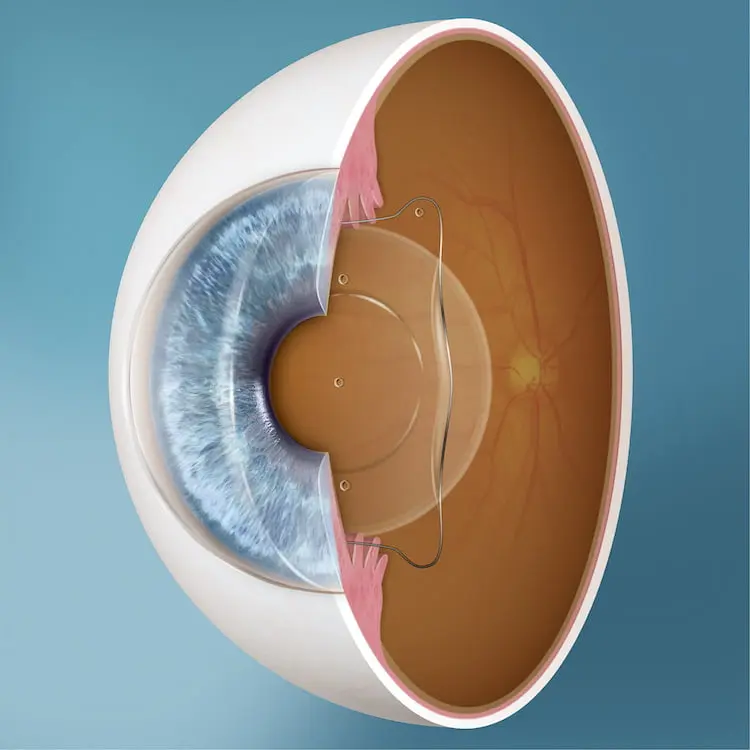
EVO ICL, or Implantable Collamer Lens, is a FDA-cleared phakic intraocular lens designed to correct moderate to high myopia (nearsightedness), with or without astigmatism. Unlike LASIK or PRK, EVO ICL works by adding a permanent-but-removable lens inside your eye, between the iris and the natural crystalline lens, leaving your corneal tissue completely intact.
The lens is made from Collamer®, a biocompatible material that combines a small amount of natural collagen with a polymer base. That collagen content is what sets it apart from standard synthetic lens materials: it works in harmony with your eye’s natural fluid dynamics rather than disrupting them, which is why the eye accepts it so readily. Patient satisfaction reflects that: 99.4% of patients surveyed said they would choose to have the procedure again. For patients with thin corneas, persistent dry eye, or prescriptions outside the range suitable for laser correction, EVO ICL offers a level of flexibility no corneal-based procedure can match, including the ability to be exchanged or removed entirely if your vision or medical needs ever change.

Who Is a Good Candidate for EVO ICL?
EVO ICL is not the right fit for every patient, and the team at Fraser Eye will assess your eligibility during a thorough consultation. You may be an ideal candidate if you:
- Are between 21 and 60 years of age with a stable prescription for at least one year
- Have moderate to high myopia between −3.00 D and −15.00 D (full correction) or between −15.00 D and −20.00 D (significant reduction of myopia)
- Have myopic astigmatism up to −4.00 D (toric EVO ICL) or up to −2.50 D of astigmatism with the standard lens
- Have adequate anterior chamber depth (a measurement your Fraser Eye doctor will take during your exam)
- Have insufficient corneal thickness for LASIK or PRK
- Prefer a reversible, cornea-sparing option
You may not be a candidate if you have a history of certain eye diseases (such as glaucoma, iritis, or uveitis), have a low endothelial cell count, or are pregnant or nursing. During your EVO ICL consultation, your Fraser Eye physician will review every factor and recommend the procedure, whether EVO ICL, LASIK, or PRK, that best fits your eyes.

How EVO ICL Compares to Other Vision Correction Procedures
EVO ICL is not a replacement for LASIK, PRK, or RLE: it is the right choice when those procedures are not. For patients with thin corneas, high prescriptions, or chronic dry eye, EVO ICL delivers the same quality of vision correction without removing any corneal tissue. At Fraser Eye, all vision correction procedures are priced the same, so the recommendation is always based on your eyes alone.
$1,882/eye
$1,882/eye
$1,882/eye
Varies, depending on lens implant
Quick (24-48 hrs)
2-4 Weeks
1-2 Weeks
1-2 Weeks
10 Minutes
10 Minutes
20-30 Minutes
15-20 Minutes

Yes, up to -12D
Yes, up to -12D
Yes, up to -20D
Yes, up to -26D
Yes, up to +5D
Yes, up to +5D

Yes, up to +10D
Yes, with Monovision
Yes, with Monovision
Yes, with multifocal IOLs
Yes, during recovery
A little, during recovery
Fraser Eye’s Flat-Rate Pricing: Among the Lowest EVO ICL Prices in the U.S.
The national average cost of EVO ICL ranges from $4,000 to $6,000 per eye, according to data compiled across U.S. refractive practices. Fraser Eye charges $1,882 per eye, the same flat rate applied to LASIK and PRK, with no hidden fees, no tiered packages, and no upsells.
This pricing model exists because Fraser Eye believes the decision about which vision correction procedure is right for you should be made entirely on clinical grounds, not financial ones. When all three procedures cost the same, your doctor and you can focus on one question: what will give your eyes the best outcome?
What’s included in the flat-rate price:
- Pre-operative evaluation and measurements
- The EVO ICL procedure itself
- Surgeon and facility fees at the Michigan Outpatient Surgery Center
- Post-operative follow-up care
Financing is available through CareCredit, including 0% interest options, making it possible to spread your investment over time. Ask your Fraser Eye team for details during your consultation.
What to Expect: Your EVO ICL Procedure
EVO ICL is an outpatient procedure performed at the Michigan Outpatient Surgery Center (MOSC), a dedicated surgical facility staffed and operated by the Fraser Eye team. MOSC has been continuously accredited by the Accreditation Association for Ambulatory Health Care (AAAHC) since 1986.
Before Your Procedure
Your consultation includes a comprehensive eye exam, corneal topography, anterior chamber depth measurement, and endothelial cell count. If you wear soft contact lenses, you’ll need to remove them at least two weeks before your evaluation. Rigid gas-permeable lenses require a longer removal period. Your doctor will give you specific instructions.
The Day of Your Procedure
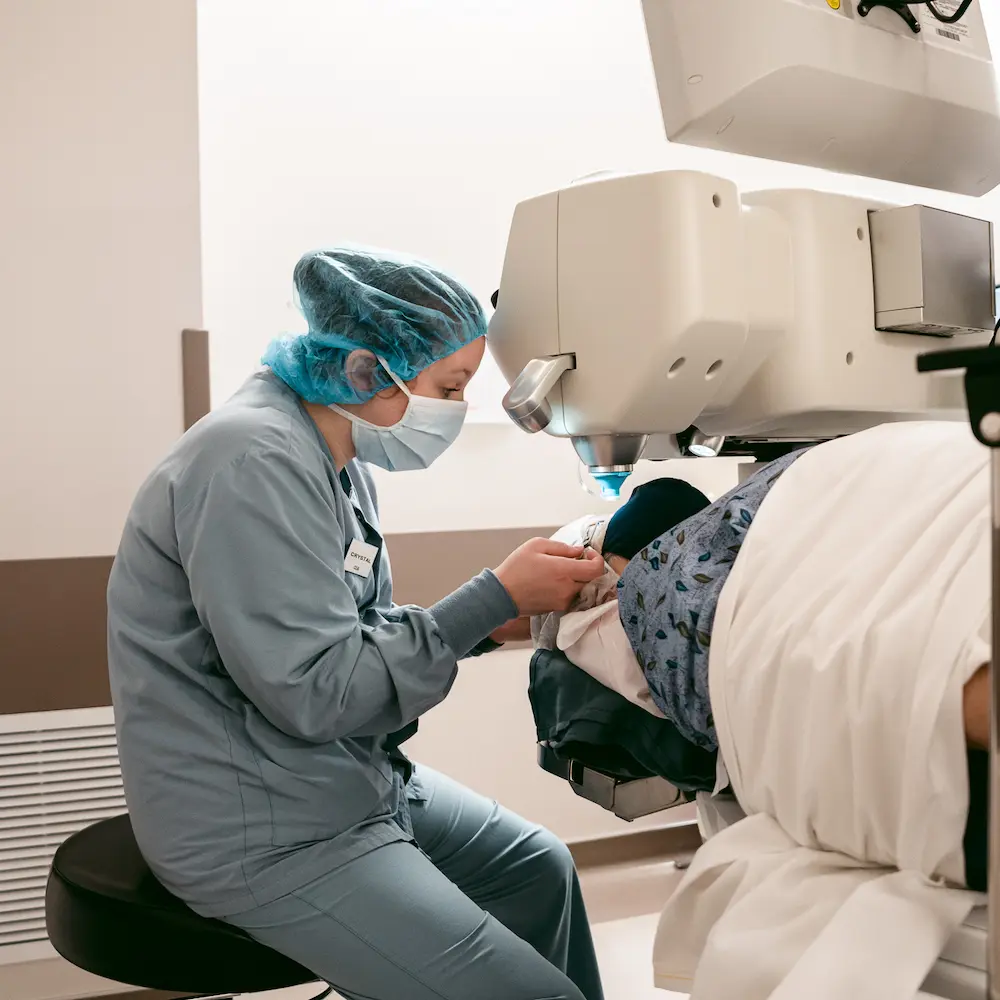
The procedure itself takes approximately 20 to 30 minutes per eye. Your surgeon will make a small, self-sealing incision at the edge of your cornea and gently fold the EVO ICL lens for insertion. Once in position behind the iris, the lens unfolds and is carefully centered. No stitches are required. Most patients have both eyes treated on the same day.
After Your Procedure
You’ll need a driver to take you home. Most patients notice dramatically improved vision within the first 24 hours, and many return to normal daily activities within one to two days. You’ll have a follow-up appointment the day after your procedure and again at one week, one month, and six months.
General recovery guidelines include:
- Driving: Do not drive until your Fraser Eye doctor confirms your vision meets the required standard, typically at your day-one follow-up.
- Work: Most patients return to desk work within one to two days. Jobs involving physical labor or dusty environments may require a longer rest period.
- Exercise: Light walking is generally fine within a few days. Avoid strenuous workouts, heavy lifting, and contact sports for at least two weeks.
- Swimming and bathing: Avoid swimming pools, hot tubs, and lakes for at least four weeks. Showering is permitted, but avoid getting water directly in your eyes during early recovery.
- Screens and reading: Some mild eye fatigue is normal in the first few days. Take breaks as needed and follow your doctor’s guidance on eye drop use.
- Eye rubbing: Avoid rubbing your eyes during recovery.
Your Fraser Eye team will provide complete post-operative instructions before you leave. Follow all prescribed eye drop schedules and contact the office promptly if you notice sudden changes in vision, increased pain, or unusual redness.
You’ll need a driver to take you home. Most patients notice dramatically improved vision within the first 24 hours, and many return to normal daily activities within one to two days. You’ll have a follow-up appointment the day after your procedure and again at one week, one month, and six months.
Clinical Outcomes You Can Expect
The numbers behind EVO ICL are worth knowing, even if the research language can feel dense. Here’s what the studies actually show, in plain terms:
- In a clinical trial submitted to the FDA for moderate-to-high myopia, more than 9 out of 10 eyes ended up with vision so close to the target prescription that no additional correction was needed. The average patient could see better than 20/20 without glasses or contacts.
- In a separate FDA trial focused on patients with moderate myopia, every single eye landed within one step of the intended prescription at six months. Zero exceptions.
- A review of nearly 3,400 eyes across multiple studies found that the average patient could see better after EVO ICL than they ever could with their best pair of glasses before surgery.
- A four-year follow-up study found no cases of corneal damage in patients who were properly selected for the procedure, and the small amount of natural cell change measured over time stayed well within safe limits.
Some patients notice glare or halos around lights in the first few weeks after surgery, particularly at night. A five-year study found that these effects fade significantly for most patients and are rarely a concern by the one-year mark. If you have naturally larger pupils, your Fraser Eye doctor will walk you through what to expect during your consultation.
Your EVO ICL Surgeons
EVO ICL procedures at Fraser Eye Care Center are performed by a team of board-certified ophthalmologists with advanced training in refractive and anterior segment surgery.
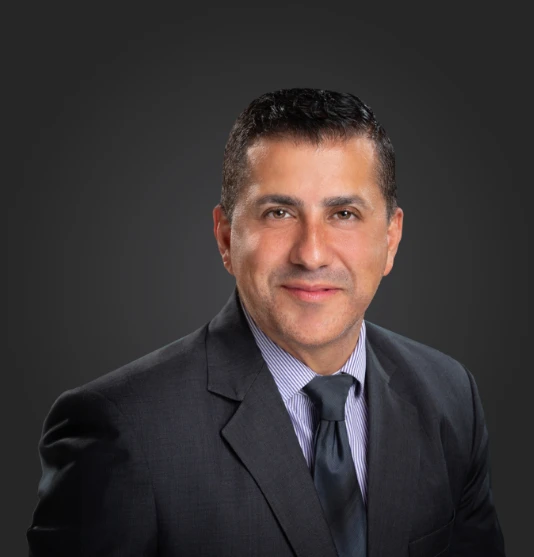
Mahdi M. Basha, DO, MMSc, FACS is the Medical Director of Fraser Eye Care Center and the Michigan Outpatient Surgery Center. A Fellow of the American College of Surgeons, he holds a Master of Medical Sciences degree reflecting advanced academic training beyond standard medical education and brings more than 20 years of surgical experience to complex refractive and premium IOL cases.
Lucas Bonafede, MD is a board-certified ophthalmologist fellowship-trained in pediatric ophthalmology and strabismus at Duke Eye Center, with residency training at Wills Eye Hospital, one of the nation’s most respected ophthalmology programs. In addition to his pediatric specialty, Dr. Bonafede performs the full range of refractive procedures including EVO ICL, LASIK, PRK, and RLE, and is an active contributor to ophthalmic clinical research.
During your consultation, you will be matched with the surgeon whose experience and approach best fit your specific eyes and visual goals. Every consultation is thorough and unhurried, with no pressure and no rush.
Your EVO ICL Providers

What Fraser Eye Patients Say
Real outcomes start with real patient experiences. Below are representative perspectives from Fraser Eye patients who have undergone vision correction procedures. Photos and full testimonials will be added as releases are obtained.
“Everything was amazing! It’s a scary thing to go through surgery on your eye for the first time but the entire process made me feel confident that this was and still is the best place for eye care.”– J.G.
Google Review

“The eye doctor is very thorough, and I’ve been very impressed by the clinic overall. The staff is organized, efficient, and professional, which made the entire experience smooth and reassuring. Highly recommend.”– A.A.
Google Review
“This place is not a gimmick. It is, rather, the best eye doctor experience I've ever had. I'm recommending this place to anyone I want to have a great experience.”– A.J.
Google Review
“The best in all of Michigan. If you need eye work, or even just a check up, look no further. I’ll continue to be back, and if anyone ever asks me where to go for eye care, this is the place.”– S.F.
Google Review
Frequently Asked Questions about EVO IC
EVO ICL is designed to be a permanent vision correction solution, but it can be removed or exchanged at any time if your vision needs change or if you require another type of eye surgery in the future. Most patients who are good candidates keep their EVO ICL for life.
The procedure is performed with topical anesthetic eye drops, so most patients report little to no pain during the surgery. Some patients feel mild pressure or light sensitivity immediately after. Discomfort during the recovery period is typically minimal and well-managed with the eye drops your Fraser Eye doctor will prescribe.
Yes. If you have both nearsightedness and astigmatism, there is a version of EVO ICL made specifically for you called the EVO Toric ICL. It corrects both at once, with a single implanted lens. The standard EVO ICL can also address mild astigmatism on its own. Your Fraser Eye doctor will take precise measurements during your consultation to determine which version fits your eyes. Long-term studies confirm the toric lens stays stable in position over time, which is what makes it an effective astigmatism correction, not just at first, but for the long term.
Some patients notice mild halos or glare around lights in the first few weeks following surgery, especially at night. A five-year study found that these visual phenomena decrease substantially over time and are rarely bothersome at the one-year mark for most patients. Patients with naturally large pupils should discuss their individual risk with their Fraser Eye doctor before proceeding.
Yes. The EVO ICL received FDA clearance in March 2022 for the correction of moderate to high myopia. The age indication was expanded in February 2026 to include patients up to age 60. EVO ICL had been approved in more than 100 countries prior to U.S. clearance and has a long-term international clinical track record spanning more than two decades.
Nothing at all. EVO ICL sits in a small space inside your eye, between the colored part of your eye and your natural lens, without making contact with either one. Your natural lens is left completely alone, which means your ability to focus up close is preserved and there is no interference with how your eye functions naturally. The FDA clinical trial confirmed that no patients developed any damage to their natural lens as a result of the implant, provided the procedure is performed in appropriately selected patients, which is exactly what your Fraser Eye pre-operative evaluation is designed to confirm.
The national average for EVO ICL ranges from $4,000 to $6,000 per eye at most U.S. refractive surgery practices. Fraser Eye’s flat rate of $1,882 per eye is one of the lowest prices for EVO ICL in the country. This is the same rate charged for LASIK and PRK, with no tiered packages, no technology fees, and no surprises. This pricing model exists because the decision about which procedure is right for you should be made entirely on clinical grounds, not financial ones.


Schedule Your EVO ICL Consultation
If you live in Metro Detroit, Michigan, Fraser Eye Care Center is your destination for EVO ICL at a price that lets you choose based on your eyes, not your budget.
EVO ICL starts at $1,882 per eye, the same flat rate as LASIK and PRK.
CareCredit financing with 0% interest is available.
- Packer M. The implantable collamer lens with a central port: review of the literature. Clinical Ophthalmology. 2018;12:2427–2438. https://www.ncbi.nlm.nih.gov/pmc/articles/PMC6267497/
- FDA Investigational Device Exemption Trial — moderate-to-high myopia cohort, 6-month outcomes. https://www.ncbi.nlm.nih.gov/pmc/articles/PMC9132105/
- FDA Investigational Device Exemption Trial — moderate myopia cohort, 6-month outcomes. https://www.ncbi.nlm.nih.gov/pmc/articles/PMC9738966/
- Central hole implantable collamer lenses for myopia: a systematic review. Clinical Ophthalmology / DovePress.https://www.dovepress.com/central-hole-implantable-collamer-lenses-for-myopia-a-systematic-revie-peer-reviewed-fulltext-article-OPTH
- Endothelial cell changes after EVO Visian ICL V4c implantation: 4-year observation study. BMC Ophthalmology.https://www.ncbi.nlm.nih.gov/pmc/articles/PMC8077217/
- Long-term visual quality outcomes after EVO ICL implantation: 5-year glare and dynamic pupil data. BMC Ophthalmology. 2025. https://doi.org/10.1186/s12886-025-04377-1
- Rotational stability of toric EVO ICL: one-year outcomes. Journal of Refractive Surgery. 2026. https://doi.org/10.3928/1081597X-20260212-02
- SMILE vs. ICL V4c meta-analysis: comparative optical quality outcomes. Journal of Refractive Surgery. 2022. https://doi.org/10.3928/1081597X-20220411-01
- FDA PMA database — EVO/EVO+ Visian ICL, P030016/S035. https://www.accessdata.fda.gov/scripts/cdrh/cfdocs/cfpma/pma.cfm?id=P030016S035