
 Contact Us
 Refer a Patient
 Pay My Bill
Vision Correction Options:
LASIK Alternatives
When LASIK isn’t the right fit for your eyes, Fraser Eye Care Center in Detroit, Michigan, offers advanced vision correction alternatives supported by decades of surgical experience. Our three refractive surgeons have been performing vision correction procedures since the 1980s, completing more than 1,000 procedures each year and over 25,000 LASIK procedures to date.
Refractive surgery is a core focus of our practice, with extensive experience across LASIK, PRK, EVO ICL™, and Refractive Lens Exchange. Each procedure is selected based on your eye anatomy, vision goals, and long-term eye health, allowing for a highly individualized approach to vision correction.
With convenient locations in Fraser, Royal Oak, Warren, Port Huron, West Bloomfield, and Rochester Hills, Fraser Eye Care helps patients throughout the Detroit area reduce dependence on glasses and contact lenses through personalized treatment planning and advanced surgical technology.
Understanding Refractive Errors
Before exploring vision correction options, it’s important to understand the different types of refractive errors that affect your vision:
Myopia(Nearsightedness)
Myopia occurs when the cornea is too curved or the eye is too long, causing distant objects to appear blurry while near objects remain clear. According to the National Eye Institute, myopia affects approximately
 Trusted Source
Myopia: A close look at efforts to turn back a growing problem
National Eye Institute
Go to Source
42%
of Americans.
Trusted Source
Myopia: A close look at efforts to turn back a growing problem
National Eye Institute
Go to Source
42%
of Americans.
Hyperopia (Farsightedness)
Hyperopia develops when the cornea is too flat or the eye is too short, making close objects appear blurry while distant vision may remain clearer. This refractive error can cause eye strain and difficulty with reading or computer work.
Astigmatism
Astigmatism results from an irregularly shaped cornea that prevents light from focusing properly on the retina, causing blurred or distorted vision at all distances. Many patients have astigmatism combined with myopia or hyperopia.
Presbyopia
Presbyopia is an age-related condition that typically begins around age 40, when the eye’s natural lens loses flexibility, making it difficult to focus on close objects. This condition affects nearly everyone as they age.
Laser Eye Surgery Options
Photo-Refractive Keratectomy (PRK)
PRK is essentially LASIK without the corneal flap, making it an excellent option for patients with thin corneas or those who participate in contact sports. During PRK, our ophthalmologist uses an excimer laser to reshape the cornea’s surface, correcting refractive errors with precision.
How PRK Works
The PRK procedure involves removing the cornea’s outer layer (epithelium) before applying the excimer laser to reshape the underlying tissue. According to research published in the Journal of Cataract and Refractive Surgery, PRK achieves comparable vision correction outcomes to LASIK with excellent long-term
Trusted Source
Laser Refractive Surgery for Vision Correction: A Review of Clinical Effectiveness and Cost-effectiveness
CADTH Rapid Response Report: Summary with Critical Appraisal
Go to Source
stability.
PRK Recovery Time and Outcomes
Recovery from PRK typically takes longer than LASIK, with most patients experiencing improved vision within one week and optimal results within three months. Over
Trusted Source
What Is Photorefractive Keratectomy (PRK)?
American Academy of Ophthalmology
Go to Source
95%
of PRK patients achieve 20/40 vision or better.
Good Candidates for PRK
- Patients with thin corneas
- Active military personnel or athletes
- Individuals with dry eye syndrome
- Those with mild to moderate myopia, hyperopia, or astigmatism
Potential PRK Risks and Complications
While PRK is generally safe, potential risks include:
- Temporary discomfort during healing (3-5 days)
- Haze formation (less than 1% of cases)
- Under or over-correction requiring enhancement
- Dry eye symptoms (typically temporary)
- Infection risk (less than 0.1% when proper post-operative care is followed)

EVO ICL™ (Implantable
Contact Lens)
The EVO ICL represents a revolutionary approach to vision correction, particularly for patients with moderate to high myopia or those who aren’t suitable candidates for laser vision correction procedures. This FDA-approved implantable contact lens is placed inside the eye during a brief surgical procedure.
Benefits of EVO ICL
Unlike laser procedures that permanently alter the cornea, the EVO ICL is reversible and provides exceptional visual quality. The lens is made from biocompatible Collamer material that works harmoniously with your eye’s natural chemistry.
EVO ICL Procedure
The outpatient procedure takes approximately 15 minutes per eye and involves creating a small incision to insert the lens behind the iris and in front of the natural lens. Most patients experience immediate vision improvement with minimal discomfort.
Ideal EVO ICL Candidates
- Patients aged 21-45 with stable vision
- Moderate to high
Trusted Source
The EVO ICL for Moderate Myopia: Results from the US FDA Clinical Trial
Clinical Ophthalmology
Go to Source
myopia
(-3.0 to -20.0 diopters)
- Astigmatism up to 6.0 diopters
- Adequate anterior chamber depth
- Healthy eyes with no history of glaucoma
EVO ICL Risks and Considerations
Potential complications include:
- Cataract formation (rare, less than 1%)
- Increased intraocular pressure (monitored closely)
- Infection risk (less than 0.1%)
- Need for lens repositioning (less than 1%)
- Glare or halos around lights (typically temporary)
Refractive Lens Exchange (RLE)
Refractive Lens Exchange, also known as Clear Lens Exchange, involves removing the eye’s natural lens and replacing it with an
Trusted Source
Refractive Lens Exchange
Cleveland Clinic
Go to Source
advanced
intraocular lens (IOL). This procedure is particularly beneficial for patients over 40 who are developing presbyopia or those with extreme refractive errors beyond the range of laser vision correction.
Types of IOLs Available
- Monofocal IOLs: Provide clear vision at one distance
- Toric IOLs: Correct astigmatism along with other refractive errors
- Presbyopia-Correcting IOLs: Advanced lenses designed to improve vision at multiple distances and reduce dependence on reading glasses.
Within each category, there are multiple lens designs and technologies available. During your consultation, your surgeon will evaluate your vision, lifestyle needs, and eye health to help determine which IOL option is best suited to your individual goals. Learn more about IOL options.
RLE Risks and Complications
As with any surgical procedure, RLE carries potential risks:
- Retinal detachment (less than 1%)
- Infection (less than 0.1%)
- IOL dislocation (rare)
- Persistent glare or halos
- Need for additional procedures
RLE Procedure and Recovery
The RLE procedure is performed using advanced technology and typically takes 15-20 minutes per eye. Recovery involves using prescribed eye drops and avoiding strenuous activities for several weeks. Most patients notice improved vision within days, with optimal results achieved within 4-6 weeks.
RLE Candidacy
- Patients over 40 with presbyopia
- High myopia or hyperopia beyond the laser correction range
- Early cataract development
- Desire to reduce dependence on reading glasses
Advanced Technology and Safety Protocols
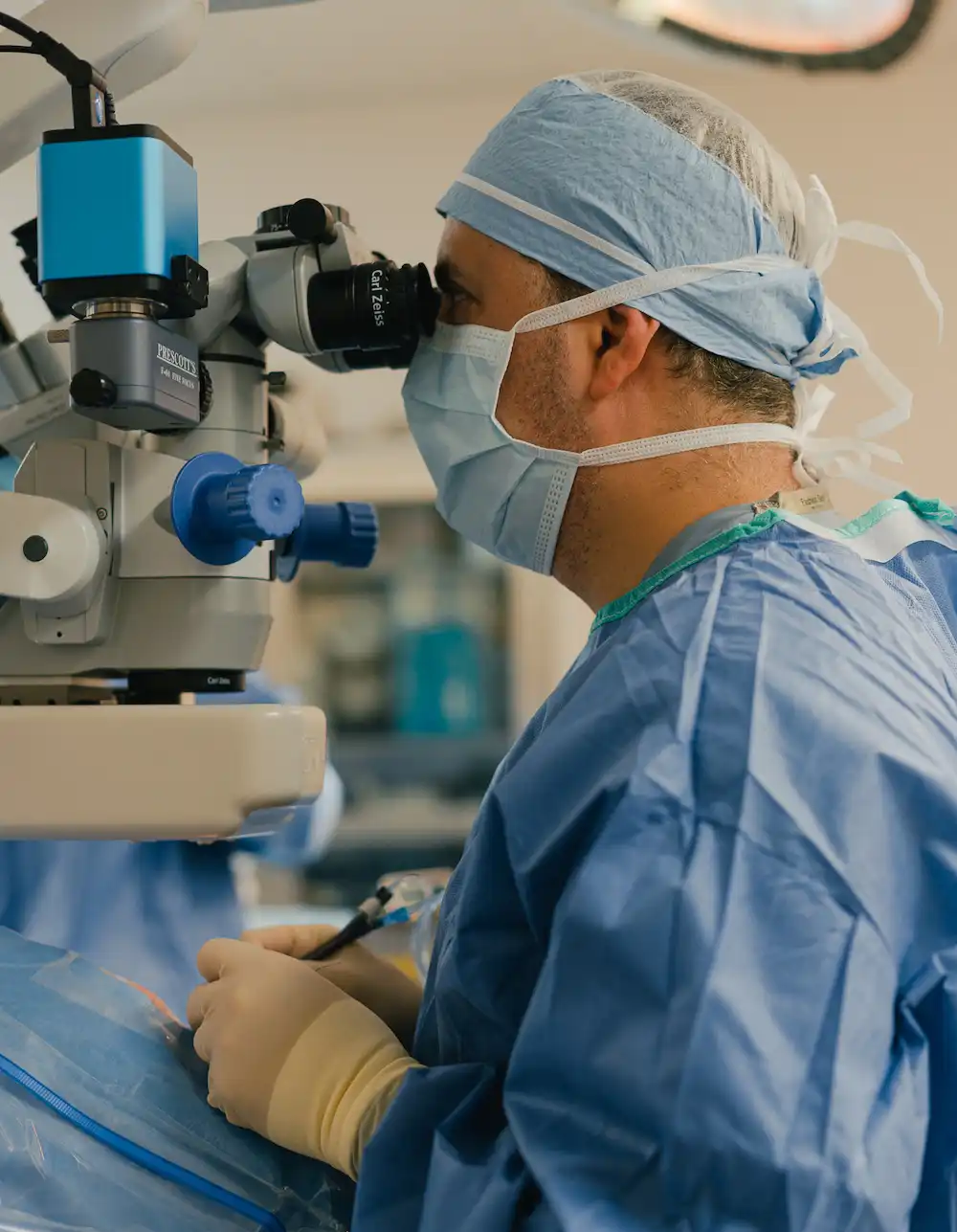
Fraser Eye Care Center utilizes state-of-the-art diagnostic equipment and surgical technology to ensure optimal outcomes:
- WaveLight EX500 Excimer Laser: Provides precise corneal reshaping
- Femtosecond Laser Technology: Creates accurate incisions for enhanced safety
- Advanced Topography Mapping: Detailed corneal analysis for personalized treatment
- Comprehensive Pre-operative Testing: Thorough evaluation to determine the best procedure
- AAAHC-Accredited Surgery Center: Continuously accredited since 1986, reflecting rigorous safety and quality standards for ambulatory surgical care
Transparent Pricing and Financing Options
We believe in transparent pricing for all vision correction procedures:
- LASIK: $1882 per eye
- PRK: $1882 per eye
- EVO ICL: $1882 per eye
- Refractive Lens Exchange: $1882-$3882 per eye, based on lens choice
Financing Options Available:
- Interest-free payment plans
- CareCredit financing (0% APR options available)
- HSA and FSA acceptance
- Special promotional pricing for qualifying patients
Insurance Coverage:
Most vision correction procedures are considered elective and not covered by insurance. However, we accept HSA and FSA funds, and our financial counselors can help determine if any portion of your procedure may be covered.
What to Expect During Your Consultation
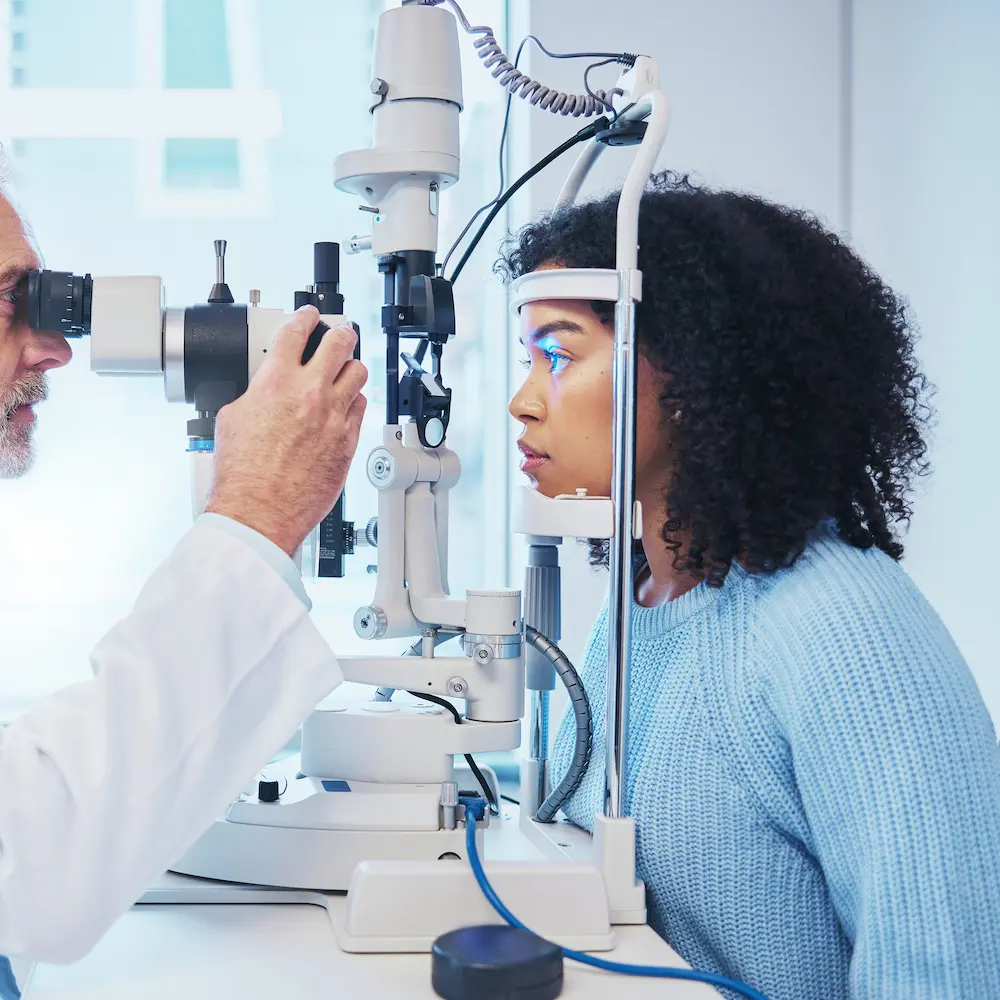
Your comprehensive consultation includes:
- Detailed Eye Examination: Complete assessment of eye health and vision
- Corneal Topography: Precise mapping of corneal shape and thickness
- Pupil Measurement: Evaluation under various lighting conditions
- Discussion of Options: Personalized recommendation based on your lifestyle and goals
- Cost Review: Transparent pricing and financing information
I wish all medical offices were as good as Fraser Eye Care. From the front desk to everyone else I have interacted with, the professionalism, care and attention are outstanding! It's so nice to leave with all your questions and concerns addressed and a plan for going forward. Gratitude!!J.C.

Frequently Asked Questions
Fraser Eye Care Center serves the Detroit area and surrounding Michigan communities with five convenient locations in Fraser, Royal Oak, Warren, Port Huron, and Rochester Hills. Our board-certified ophthalmologists provide comprehensive consultations to determine the best vision correction option for your unique needs.
Many patients benefit from combining vision correction with other eye care treatments such as dry eye therapy, glaucoma management, or cataract surgery. During your consultation, we’ll discuss how to optimize your overall eye health alongside your vision correction goals.
The best vision correction procedure depends on factors including your prescription, corneal thickness, age, lifestyle, and overall eye health. Our comprehensive evaluation process helps determine whether LASIK, PRK, EVO ICL™, or Refractive Lens Exchange will provide optimal results for your specific situation.
Recovery varies by procedure: PRK patients typically return to normal activities within one week, EVO ICL™ patients often resume regular activities within 1-2 days, and RLE patients generally recover within 2-4 weeks. Your surgeon will provide detailed post-operative instructions tailored to your chosen procedure.


Schedule Your Free Consultation
Take the first step toward clear vision by scheduling your comprehensive consultation at Fraser Eye Care Center. Our experienced team will evaluate your candidacy for LASIK alternatives and help you choose the vision correction procedure that best fits your lifestyle and goals. Contact us to book your consultation.
1 National Eye Institute. Myopia: A close look at efforts to turn back a growing problem. https://www.nei.nih.gov/about/news-and-events/news/myopia-close-look-efforts-turn-back-growing-problem. Accessed September 8, 2025.
2 CADTH Rapid Response Report: Summary with Critical Appraisal. Laser Refractive Surgery for Vision Correction: A Review of Clinical Effectiveness and Cost-effectiveness. https://www.ncbi.nlm.nih.gov/books/NBK532537/. Accessed September 8, 2025.
3 American Academy of Ophthalmology. What Is Photorefractive Keratectomy (PRK)? https://www.aao.org/eye-health/treatments/photorefractive-keratectomy-prk. Accessed September 8, 2025.
4 Clinical Ophthalmology. The EVO ICL for Moderate Myopia: Results from the US FDA Clinical Trial. https://pmc.ncbi.nlm.nih.gov/articles/PMC9738966/. Accessed September 8, 2025.
5 Cleveland Clinic. Refractive Lens Exchange. https://my.clevelandclinic.org/health/treatments/24840-refractive-lens-exchange. Accessed September 8, 2025.